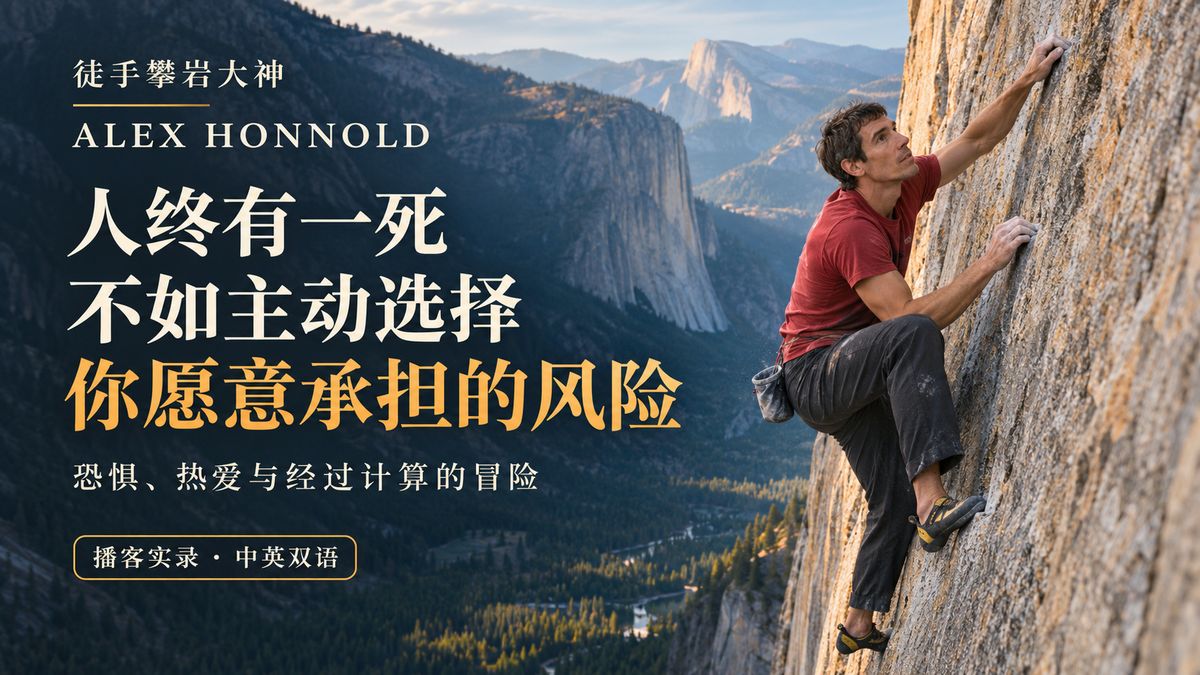
提起 Alex Honnold,很多人第一反应是纪录片《徒手攀岩》里那个不带绳索攀登酋长岩的男人。大众总把他归为异类:大脑异于常人、天生无畏、为冒险赌上生命。
但在这篇深度播客访谈里,我们看见一个完全不一样的 Alex。 他出身普通中产家庭,父母关系紧张,他20‑30 岁整整十年住在面包车,每月只靠几百美元生活;他并非不知恐惧,攀岩时的害怕、自我怀疑、事业漫长的蛰伏全都真实存在。
他推翻流传已久的 “杏仁核不敏感” 神话:无畏不是天生,是二十年反复直面恐惧训练出来的大脑。 他指出,所有人都在承担风险,区别只在于,这份风险是不是你主动选择的。死亡是所有人的终点,与其小心翼翼过完一生,到老悔恨从未追随热爱,不如主动计算风险,去做那些让你引以为傲的事。
本文整理自 Alex 深度播客对话,关于原生家庭、恐惧、长期坚持、亲密关系、财富观与如何过有意义的一生。以下内容来自Diary of A CEO播客“The Greatest Climber Alive: I Shouldn’t Have Attempted That Climb!”
1. 童年与家庭背景 / Childhood and Family Background
Alex 在一个父母关系紧张的家庭中长大,父母最终离婚,但为了孩子维持婚姻。母亲高度追求完美、多才多艺,父亲则长期抑郁。家庭情感表达很少,但整体安全。他从小感受到母亲的爱是有条件的——与表现挂钩。父亲55岁因心脏病突然去世,这让他深刻意识到自己的死亡不可避免。
Alex grew up in a tense household where his parents eventually divorced but stayed together for the kids. His mother was high-performing and perfectionistic; his father was deeply depressed. The family was unemotional but safe. He felt his mother’s love was conditional—tied to performance. His father died suddenly of a heart attack at 55, which made Alex acutely aware of his own mortality.
2. 攀岩的起点与货车生活 / The Beginning of Climbing and Van Life
Alex 从五六岁开始攀岩,立刻爱上这项运动。父亲去世后,他用继承的钱买债券,每月靠约300美元生活,住在货车里长达10年(20岁到30岁)。他买的第一辆货车花了1万美元,在里面无法站立,但他觉得非常自由。这段时间他专注于攀岩、学习和成长,而不是赚钱。
Alex started climbing at age five or six and immediately loved it. After his father died, he invested his inheritance in bonds and lived on about $300 a month, living in a van for 10 years (ages 20 to 30). His first van cost $10,000 and he couldn’t even stand up in it, but he felt incredibly free. He focused on climbing, learning, and growing—not making money.
3. 风险哲学:选择自己的风险 / Risk Philosophy: Choose Your Own Risks
Alex 认为,人们误以为不冒险就是安全,但实际上每个人都在承担风险。不运动、饮食不良、开车、喝酒都会带来风险。区别在于:你是否有意识地选择了你承担的风险。他主动选择攀岩的风险,并仔细评估、缓解风险。他批评那些“不冒险”却过着高风险生活方式的人。
Alex argues that people mistakenly think avoiding risk means safety, but everyone takes risks. Being sedentary, eating poorly, driving, drinking—all carry risk. The difference is whether you consciously choose the risks you take. He chooses climbing risks and carefully evaluates and mitigates them. He criticizes those who claim to avoid risk while living high-risk lifestyles.
4. 恐惧与大脑:不是没有恐惧,而是适应了恐惧 / Fear and the Brain: Not Fearless, But Adapted
很多人误以为 Alex 的杏仁核不活跃,所以他不害怕。他解释:那只是他在安全环境中看黑白照片的反应。他攀岩20年,长期暴露于恐惧中,所以对普通刺激不再敏感。他仍然会害怕,但学会了管理恐惧。他认为,通过反复暴露,任何人都可以改变对恐惧的反应。
Many people think Alex’s amygdala is inactive, so he feels no fear. He explains: that was just his response to black-and-white photos in a safe environment. After 20 years of climbing, he’s been exposed to fear so much that ordinary stimuli no longer trigger him. He still feels fear but has learned to manage it. He believes anyone can change their fear response through repeated exposure.
5. 自由 solo:极端准备与可视化 / Free Soloing: Extreme Preparation and Visualization
自由 solo 是无绳攀岩,失误即死亡。但 Alex 不是一时冲动——他花费数年准备、练习、可视化每个动作。他会在有绳情况下反复攀爬,分解每一段,做详细笔记。他承认自己在攀爬中会感到恐惧,但通过理性评估风险和长期暴露,他能够继续前进。
Free soloing is climbing without a rope, where a mistake means death. But Alex doesn’t act impulsively—he spends years preparing, practicing, and visualizing every move. He climbs with ropes repeatedly, breaks the route into sections, and takes detailed notes. He admits he feels fear while climbing, but through rational risk assessment and long-term exposure, he can keep going.
6. 台北101:为电视而爬,但仍在舒适区 / Taipei 101: Climbing for TV, But Still in the Sweet Spot
Alex 在 Netflix 直播攀爬台北101。他选择东南面是因为光线好、拍摄效果好,但这也意味着更多阳光和更热。他提前侦察、用绳练习每一段。他认为这不是他最极限的攀爬,但在他的“甜蜜点”——有挑战、有趣、可训练,但不会超出可控范围。他相信自己在攀爬时不会坠落。
Alex climbed Taipei 101 live on Netflix. He chose the southeast face for good lighting and filming, even though it meant more sun and heat. He scouted and practiced every section with ropes. He says it wasn’t his absolute limit, but in his “sweet spot”—challenging, fun, trainable, but within control. He felt confident he wouldn’t fall.
7. 金钱与价值:先创造价值,金钱随之而来 / Money and Value: Create Value First, Money Follows
Alex 从不以赚钱为目标。他早期每年只赚1万美元,但住在货车里足够生活。他做大量免费工作,拍免费攀岩影片,后来因此获得国家地理、60分钟等机会。他认为:不要纠结于报酬,专注于把事做到极致,价值最终会变现。他建议年轻人不要过度规划,而是保持好奇,做热爱且挑战自己的事。
Alex never aimed to make money. He earned $10,000 a year early on, enough for van life. He did tons of free work—climbing films for free—which later led to National Geographic, 60 Minutes, and more. He believes:don’t obsess over pay; focus on making the thing rad, and value will monetize itself. He advises young people not to over-plan, but stay curious and do what they love and what challenges them.
8. 情感表达与亲密关系 / Emotional Expression and Intimacy
Alex 承认自己情感表达较少,不如妻子情感智慧高。他们曾因“行动 vs 言语”发生争执——他用行动表达爱,妻子需要言语。他正在缓慢进步,认为这是终身项目。妻子的信描述了他是如何通过“看见”和“行动”表达爱的——注意细节、调整日程、为家庭付出。他认同“行动胜于言语”,但也接受需要偶尔说出正确的话。
Alex admits he is less emotionally expressive and less emotionally intelligent than his wife. They’ve argued about “actions vs words”—he shows love through action, she needs verbal expression. He is slowly improving, seeing it as a lifelong project. His wife’s letter describes how he shows love by “seeing” and acting—noticing details, adjusting schedules, showing up for family. He agrees actions speak louder, but accepts he sometimes needs to say the right thing too.
9. 坚持与目标:小步前进,累积复利 / Persistence and Goals: Small Steps, Compound Interest
Alex 认为,伟大不是一蹴而就,而是“好”的重复。他建议设定适合当前生活阶段的目标,不要被宏大的“白鲸”目标压垮。他喜欢有很多小目标,不断尝试,不知道哪个会变得“酷”。他引用 Steve Jobs 的话:你只能在回头看时连接各个事件。清晰不是行动的前提,而是行动后的奖励。
Alex believes greatness isn’t a single act—it’s “good” repeated. He advises setting goals appropriate to your current life stage, not being crushed by a giant “white whale” goal. He likes having many small goals, constantly trying things, not knowing which will become “rad.” He quotes Steve Jobs: you can only connect the dots looking backward. Clarity isn’t a prerequisite for action—it’s the reward after you move.
10. 神经可塑性与克服恐惧 / Neuroplasticity and Overcoming Fear
Alex 讨厌别人说他“天生不同”。他认为自己只是中产阶级郊区孩子,没有运动天赋。他之所以不同,是因为他热爱攀岩,投入了30年,每周5天。他相信神经可塑性:任何年龄都可以通过暴露和练习改变大脑对恐惧的反应。他鼓励人们从“台北1”开始,而不是直接瞄准“台北101”。
Alex hates being told he’s “built differently.” He sees himself as a middle-class suburban kid with no athletic talent. He’s different because he loves climbing and has invested 30 years, five days a week. He believes in neuroplasticity: at any age, you can change your brain’s fear response through exposure and practice. He encourages people to start with “Taipei 1,” not “Taipei 101.”
11. 给年轻人的建议:找到你热爱的事,然后努力 / Advice for Young People: Find What You Love, Then Work Hard
Alex 会给女儿的建议:找到你热爱的事,然后全力以赴。不要因为觉得“困难”就放弃,因为如果你热爱它,它就不会感觉像苦工。他认为,死亡的必然性不是悲观的理由,反而是解放:正因为生命有限,才要主动选择自己想体验的人生。人很容易陷入损失厌恶,成功之后开始只想守住已有成果,回避新冒险,导致人生变窄。 世俗意义的名气热度转瞬即逝,会被新的事件覆盖。真正重要的是自己实实在在做过什么,对身边人与世界产生的真实影响。
Alex’s advice to his daughters: find what you love and go hard. Don’t give up because it’s “hard”—if you love it, it won’t feel like hard work. He advises not over-planning your career, staying open and curious, letting the world change you. He believes that inevitability of death is not pessimistic but liberating. Precisely because life is finite, intentionally choose the life you want to live. After achieving success, people easily fall into loss‑aversion: they only want to protect what they have and avoid new risks, narrowing their life. Fame and public hype fade quickly, overtaken by new events. What truly matters is what you actually accomplish and real impact on people and the world.
12. 基金会与回馈 / Foundation and Giving Back
Alex 通过 Honnold Foundation 支持全球社区太阳能项目。他每年捐出约三分之一的收入,覆盖基金会所有运营成本,因此所有外部捐款直接用于项目。基金会已向30个国家的130个项目捐赠超过1300万美元,影响65万人,创造1200多个工作岗位,保护1500万英亩生物多样性森林。他认为这比攀岩更有直接的物质影响。
Through the Honnold Foundation, Alex supports community solar projects worldwide. He donates about one-third of his income annually, covering all overheads, so external donations go directly to projects. The foundation has given over $13 million to 130 projects in 30 countries, impacting 650,000 people, creating 1,200+ jobs, and protecting 15 million acres of biodiverse forest. He sees this as more directly impactful than climbing.
13. 关键金句 / Key Quotes
-
“你终究会死,所以不如选择你愿意承担的风险,做你想做的事,至少死时快乐。”
“You’re going to die either way. So you might as well take smart, calculated risks and do all the things you want to do—and at least die happy.”
-
“我不是没有恐惧,我只是在恐惧中待了太久,所以它不再那么可怕。”
“I’m not fearless. I’ve just been scared for so long that it’s not that scary anymore.”
-
“不要纠结于报酬,专注于把事做到极致,价值最终会变现。”
“Don’t get hung up on how much you get paid. Just do the thing. Make sure it’s rad. It all sorts itself out.”
-
“你只能回头看时连接点。清晰不是行动的前提,而是行动后的奖励。”
“You can only connect the dots looking backward. Clarity isn’t a prerequisite for action—it’s the reward after you move.”
-
“Greatness doesn’t exist. Greatness is just good repeated.”
https://mp.weixin.qq.com/s/WkuSEZmUGI3RpLzaVTBHdw
转载请注明:励志啊,互联网最励志资源聚集地 » 徒手攀岩大神 Alex Honnold:人终有一死,不如主动选择你愿意承担的风险|播客实录(中英)